Introduction
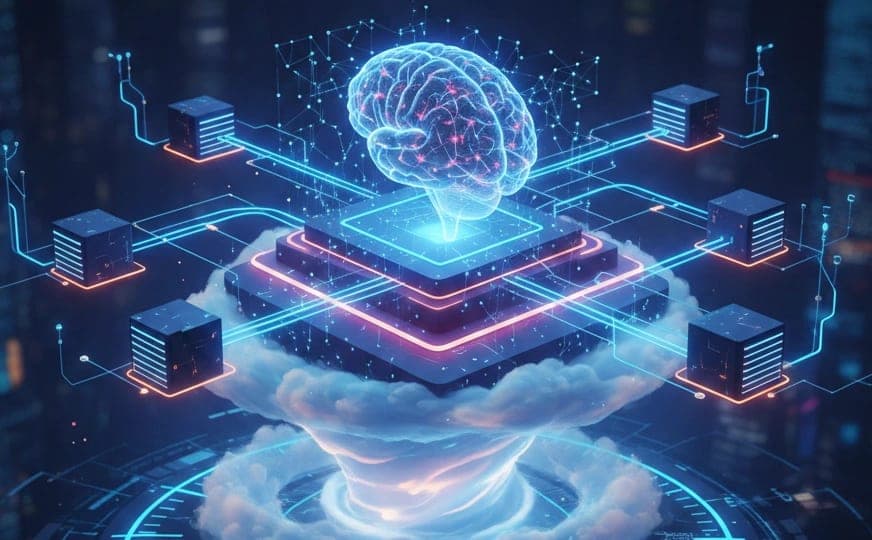
As we venture deeper into the age of technology, the intersection of artificial intelligence (AI) and serverless computing is emerging as a pivotal trend that holds the potential to revolutionize cloud computing by 2026. This transformative pairing not only enhances efficiency and scalability but also fosters innovation in ways we have yet to fully realize. In this article, we'll explore the nuances of serverless architecture, the burgeoning capabilities of AI, and how their convergence is set to disrupt the traditional cloud computing landscape.
Understanding Serverless Computing
To appreciate the impact of serverless computing, we first need to clarify what it means. Serverless computing doesn’t imply the absence of servers; instead, it denotes a model where developers can build and run applications without having to manage or provision servers explicitly. The cloud provider takes on the responsibility of server management, allowing developers to focus on writing code and deploying applications.
This model is highly advantageous for several reasons:
- Cost-Effectiveness: With serverless computing, users pay only for the resources they utilize, effectively eliminating the overhead of idle server capacity.
- Scalability: Serverless architectures can automatically scale to accommodate fluctuations in demand, ensuring that applications remain responsive and stable under varying loads.
- Speed: Serverless platforms expedite the development process by providing pre-built services and simplifying deployment cycles.
Notable examples of serverless platforms include AWS Lambda, Microsoft Azure Functions, and Google Cloud Functions. As adoption of these platforms continues to grow, the foundation is being laid for an even more significant innovation—integrating AI capabilities.
The Rise of AI: A Game Changer
Artificial intelligence has rapidly evolved over recent years, unlocking astounding possibilities across various sectors. From predictive analytics to natural language processing, AI is reshaping the way organizations operate. By 2026, we can expect AI to not only enhance decision-making processes but also drive automation and personalization in unprecedented ways.
AI's influence extends across several domains:
- Data Analysis: AI can sift through vast amounts of data to identify patterns and insights that would take humans significantly longer to discern.
- Machine Learning: This subset of AI enables systems to learn from data inputs and improve over time without explicit programming.
- Natural Language Processing: Chatbots and virtual assistants powered by AI can significantly enhance customer interaction and accessibility.
As we move towards 2026, the integration of AI into serverless infrastructures promises to harness these advancements, taking cloud computing to new heights.
The Convergence of Serverless and AI
The intersection of serverless architecture and AI creates a synergy that can redefine how businesses approach application development and deployment. Here are a few ways this convergence will manifest:
1. Enhanced Efficiency
By harnessing AI capabilities within a serverless framework, organizations can automate repetitive tasks. For example, serverless functions can be triggered by events to execute AI-driven analyses on incoming data, providing real-time insights without manual intervention.
2. Improved Scalability
As AI-driven applications often experience variable traffic, the serverless model allows these applications to adapt in real-time. Consider a weather application that uses machine learning algorithms to provide forecasts. During peak seasons, like hurricane alerts, the application can automatically scale up resources to handle increased user inquiries.
3. Cost Optimization
Serverless computing allows businesses to fine-tune their operational costs. By integrating AI, companies can analyze usage patterns and predict resource needs more accurately, ensuring that they only pay for what they use. This predictive element can result in significant savings over time.
Challenges to Consider
While the combination of serverless and AI provides compelling advantages, it is essential to acknowledge the potential challenges. Data security and compliance remain at the forefront. As organizations utilize AI to process sensitive information within a serverless environment, securing data becomes critical.
Moreover, the complexity of integrating AI into existing serverless architectures can be daunting. Organizations need to ensure they possess the required skills or partner with experts who can guide them through the process.
Real-World Applications and Case Studies
Several forward-thinking organizations are already leveraging the power of serverless computing and AI. For instance, a startup in the retail sector used AWS Lambda to deploy a machine learning model that predicts customer purchasing behavior based on their browsing history. The result? A dramatic increase in conversion rates and customer satisfaction.
Another noteworthy case involves a healthcare organization that utilized Google Cloud Functions to process patient data swiftly. By integrating AI algorithms for patient diagnostics, they were able to deliver faster and more accurate results, ultimately enhancing patient care.
The Future of Cloud Computing: What to Expect by 2026
Looking ahead to 2026, we can anticipate a landscape where serverless architecture and AI work hand in hand to empower businesses across sectors. The digital economy will likely be increasingly characterized by agility, where companies leverage these technologies to respond promptly to market shifts and customer needs.
This evolution will lead to the proliferation of new applications, services, and business models that were previously unimaginable. Organizations that embrace this trend early will benefit from a competitive edge as they navigate the complexities of the digital landscape.
Conclusion
Serverless computing and artificial intelligence represent a hidden trend with the potential to disrupt cloud computing fundamentally by 2026. These technologies are not just buzzwords; they embody a paradigm shift towards a more efficient, cost-effective, and scalable future. As we continue to explore the nuances of this convergence, it is clear that the possibilities are limitless for those who are willing to adapt and innovate.
FAQs
-
What is serverless computing?
Serverless computing is a cloud computing model where the cloud provider manages server infrastructure, allowing developers to focus on writing code and deploying applications without having to worry about server management.
-
How does AI enhance serverless computing?
AI enhances serverless computing by automating tasks, enabling real-time data analysis, and improving application scalability, which results in more efficient operations.
-
What are the benefits of combining AI and serverless?
The combination offers enhanced efficiency, improved scalability, and cost optimization, allowing organizations to adapt to changing demands effectively.
-
What challenges might arise when integrating AI into serverless architectures?
Challenges include ensuring data security and compliance, as well as overcoming the complexity of integration, which may require specialized skills or external expertise.
-
Can you provide examples of successful implementations of serverless and AI?
Yes, retail startups and healthcare organizations have successfully utilized serverless computing and AI to enhance customer engagement and improve patient diagnostics, respectively.
-
What does the future hold for serverless and AI in cloud computing?
By 2026, we can expect these technologies to shape a more agile digital economy, leading to new applications and business models that leverage their combined strengths.
-
Is serverless computing cost-effective?
Yes, serverless computing is generally cost-effective as users only pay for the resources they consume, eliminating the costs associated with idle server capacity.
-
How can businesses prepare for the shift towards serverless and AI?
Businesses can prepare by investing in skill development for their teams, exploring partnerships with experts, and gradually adopting serverless architectures and AI capabilities in their workflows.