The Future of AI Development in 2026
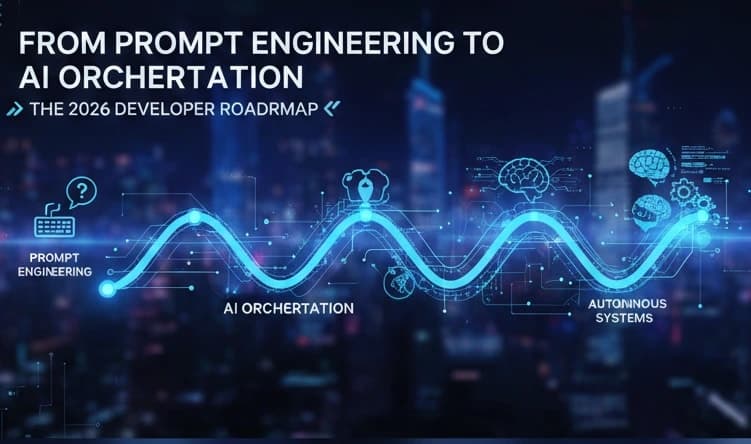
As we embark on the next stage of artificial intelligence (AI) evolution, developers find themselves at the forefront of a technological revolution that promises to redefine industries and user experiences alike. The year 2026 marks a pivotal point on the roadmap from prompt engineering to AI orchestration, a journey where developers will need to adapt and innovate continually.
Understanding Prompt Engineering
Prompt engineering surfaced as one of the first ways developers interacted with AI models, particularly in natural language processing. Essentially, it’s about crafting precise inputs to elicit the best possible responses from AI systems. But what does this entail? Crafting a well-defined prompt requires not just technical skills but also an understanding of linguistics and human behavior.
Think about it: when you query a search engine, the better your keywords, the more relevant your results. The same principle applies. Developers had to learn which phrasing, context, and detail provided the most useful outputs, turning it into an art form. However, as AI evolves, the role of prompt engineering is expected to shift.
AI Orchestration: The Next Frontier
AI orchestration takes the fundamentals of prompt engineering a step further. In this phase, developers will learn not just to interact with a single AI model but to manage and integrate multiple AI services and applications into cohesive systems. Imagine an orchestra, where each musician plays their part, but the conductor ensures harmony and coherence in the performance. Similarly, AI orchestration will enable developers to orchestrate various intelligent systems to work together seamlessly.
Why AI Orchestration Matters
The importance of orchestration cannot be overstated. As businesses adopt multiple AI solutions, integrating them to function as a unit will be crucial. For example, a retail operation might employ an AI-driven inventory management system, a customer service chatbot, and a personalized marketing algorithm. Each serves a vital role, but they must communicate and collaborate effectively to maximize their potential.
In 2026, developers must embrace orchestration tools and methodologies that allow for this integration. Frameworks such as Kubernetes for container orchestration, or more specialized platforms like MLflow for managing machine learning workflows, are already paving the way. Understanding these technologies will be critical for developers aiming to stay relevant.
The Skills Needed for the 2026 Developer
Transitioning from prompt engineering to AI orchestration also requires a new skill set. Developers must cultivate the following:
- Programming Languages: Proficiency in languages such as Python, Java, or Scala, which are commonly used in AI development.
- Machine Learning Concepts: A deep understanding of how machine learning algorithms work, including supervised and unsupervised learning.
- Data Management: Skills in handling databases and data warehouses will be essential, as data is at the core of AI functionality.
- API Integration: Knowing how to integrate various AI services using APIs will be necessary for effective orchestration.
- Soft Skills: Communication and collaboration skills will play a vital role as developers will often work in cross-functional teams.
Real-World Applications of AI Orchestration
As AI orchestration becomes the norm, various industries will start showcasing its benefits. Here are a few anticipated applications:
Healthcare
In healthcare, AI-driven applications will need to communicate with each other, sharing patient data, diagnostics, and treatment recommendations. Imagine a scenario where a patient's health records are analyzed by an AI that informs a doctor of potential issues, while simultaneously coordinating with a telehealth system that schedules appointments. The orchestration ensures that all elements work together for better patient outcomes.
Finance
In the finance sector, AI models analyzing stock trends, risk factors, and investment opportunities can create a robust, real-time financial advice framework. Incorporating orchestration will allow these models to analyze vast data streams efficiently and provide holistic insights to investors and financial advisors.
Smart Cities
Smart cities will rely heavily on AI orchestration, with traffic management systems, public safety measures, and energy distribution networks working in concert. By integrating AI technologies, city planners can build environments that respond dynamically to changing conditions, enhancing quality of life for residents.
Challenges Facing Developers
While the roadmap from prompt engineering to AI orchestration offers exciting opportunities, it’s not without challenges. Developers will face the uphill task of:
- Keeping Pace with Rapid Change: The tech landscape evolves quickly. Continuous learning is essential to stay ahead.
- Data Privacy and Ethics: With increased integration comes heightened responsibility. Developers must balance innovation with ethical considerations, particularly regarding user data.
- Complexity of Integration: Orchestrating multiple AI systems can quickly become complicated. Developers need robust strategies and frameworks to manage this complexity effectively.
Preparing for the Future
To thrive in this shifting environment, developers should begin laying the groundwork today. Engaging in online courses about AI orchestration, machine learning, and systems integration will enhance their skills. Furthermore, participating in community forums and contributing to open-source projects will provide practical experience and valuable insights.
In essence, from honing prompt engineering skills to mastering orchestration, the roadmap for developers in 2026 is one of adaptation and growth. Embracing these changes will not only enable personal career advancement but also contribute to the broader technological landscape.
Conclusion: Embrace the Change
The journey from prompt engineering to AI orchestration represents a fundamental transformation in how developers will interact with technology. It’s a rich tapestry of skill, innovation, and collaboration that will define the industry in the years to come. By embracing this change and gearing up for what’s ahead, developers can position themselves as leaders in the ever-evolving world of AI.
Frequently Asked Questions
What is prompt engineering?
Prompt engineering is the practice of crafting inputs for AI models to yield optimal outputs. It involves understanding how to communicate effectively with AI to extract the best possible results.
How does AI orchestration differ from prompt engineering?
While prompt engineering focuses on interacting with individual AI models, AI orchestration involves integrating multiple AI systems to work together seamlessly, much like conducting an orchestra.
What skills are essential for developers in 2026?
Developers should focus on programming, machine learning concepts, data management, API integration, and essential soft skills like communication and collaboration.
What industries will benefit from AI orchestration?
Healthcare, finance, and smart city planning are just a few sectors that will see significant improvements through effective AI orchestration.
What challenges do developers face with AI orchestration?
Developers must navigate rapid technological changes, data privacy and ethical considerations, and the complexity of system integration.
How can developers prepare for these changes?
Engaging in continuous learning through courses, participating in community discussions, and working on practical projects can help developers build the necessary skills for the future.