
Introduction to Cloud Computing
In today's digital age, cloud computing has become a cornerstone for businesses, enabling them to scale, innovate, and operate more efficiently. As we venture into 2026, three major players dominate the cloud computing landscape: Amazon Web Services (AWS), Microsoft Azure, and Google Cloud Platform (GCP). Each provides a unique set of services tailored to meet diverse business needs and has evolved significantly over the years.
A Brief Overview of AWS, Azure, and Google Cloud
AWS, launched in 2006, remains the leader in market share among cloud service providers. Its extensive service offerings cater to enterprises of all sizes, making it a go-to for scalability and flexibility.
Microsoft Azure, coming in strong since its launch in 2010, has leveraged its existing software ecosystem, making it a favorite among businesses already using Microsoft products. Azure’s integration with tools like Office 365 and Dynamics 365 enhances its appeal.
Google Cloud, while newer, is rapidly gaining traction thanks to its innovative data analytics capabilities and strong emphasis on machine learning. Google Cloud's infrastructure aligns well with enterprises focusing on big data and AI applications.
Service Offerings Comparison
Compute Services
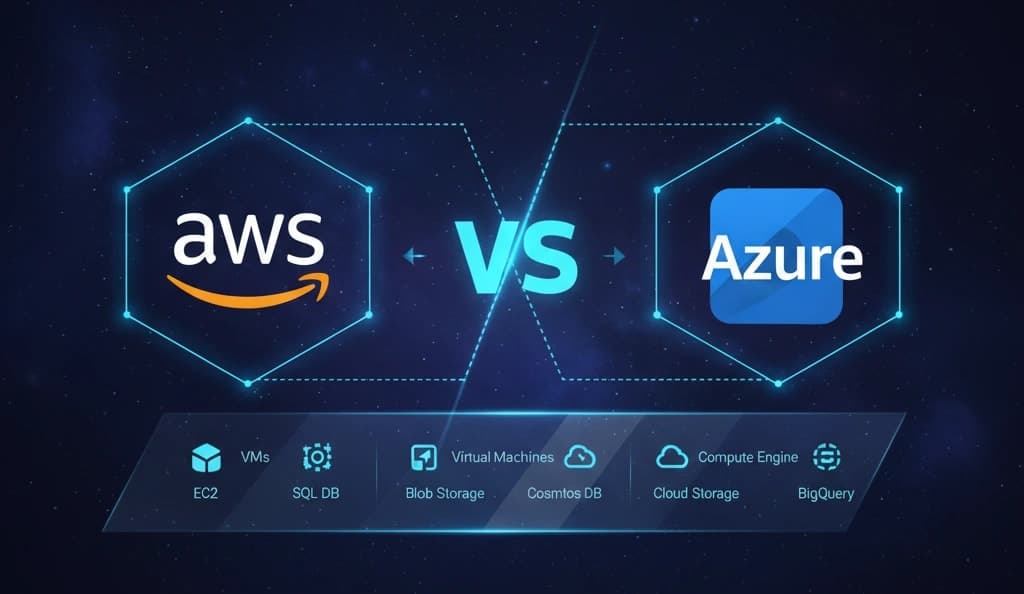
When it comes to compute services, AWS leads with its Elastic Compute Cloud (EC2), offering a range of instance types for various workloads. Azure provides Virtual Machines (VMs) that integrate seamlessly with Windows environments, making it easy for existing Microsoft users to transition. Google Cloud's Compute Engine stands out for its ability to handle complex workloads, particularly for applications requiring high-performance computing.
Storage Solutions
Storage is critical for cloud platforms. AWS offers a variety of storage solutions, including Simple Storage Service (S3), which is renowned for its durability and scalability. Azure Blob Storage is similarly robust and is especially favored for applications requiring massive amounts of unstructured data. Google Cloud offers Cloud Storage, which claims to have one of the lowest latency and high availability, making it suitable for real-time applications.
Networking and Security
Networking capabilities are essential for effective cloud computing. AWS boasts an extensive network of data centers that allow for low-latency connections worldwide. Azure’s Virtual Network enables users to create private networks, while Google Cloud's Virtual Private Cloud (VPC) offers flexible configurations that appeal to developers seeking control over their environments.
Security is a critical element across all platforms. AWS employs a shared responsibility model, ensuring that users understand their security roles. Azure has robust compliance offerings, particularly for enterprises concerned about regulatory requirements. Google Cloud emphasizes its security-first architecture, continuously innovating to protect user data.
Pricing Structures
Understanding pricing is vital when selecting a cloud provider. AWS utilizes a pay-as-you-go pricing model, but costs can quickly escalate if not monitored. Azure also follows a similar model but offers discounts for long-term commitments, making it an attractive option for enterprises with predictable workloads. Google Cloud’s pricing structure is competitive, with simple pricing models that appeal to startups and smaller businesses.
Use Cases and Target Audiences
Enterprise Applications
For enterprises, AWS is often the default choice due to its comprehensive service catalog. Azure excels in environments where Microsoft applications dominate, making it ideal for companies deeply integrated into the Microsoft ecosystem.
Startups and Developers
Startups often gravitate toward Google Cloud for its ease of use in data analytics and machine learning capabilities. AWS also appeals to tech innovators thanks to its extensive service offerings and scalability.
Performance and Reliability
Performance is a key differentiator among cloud providers. AWS has consistently high availability across its services, whereas Azure has made significant strides in this area but still lags slightly behind AWS. Google Cloud is recognized for its speed, especially in terms of data processing and machine learning, making it a preferred choice for data-intensive applications.
Innovation and Future Directions
As we look toward the future, all three cloud giants continue to innovate. AWS focuses on expanding its service range and enhancing AI capabilities. Azure is committed to integrating more with other Microsoft products, while Google Cloud is channeling investments into AI and machine learning, seeking to differentiate itself in predictive analytics and automation.
Conclusion
In 2026, the right cloud provider for your business depends on your specific needs, existing infrastructure, and future goals. AWS remains the leader due to its extensive capabilities, Azure appeals to Microsoft-centric businesses, and Google Cloud is an excellent choice for companies prioritizing data analytics and machine learning. Assessing your requirements and potential growth areas will guide your decision, ensuring that your cloud journey propels your business forward.
FAQs
What are the main differences between AWS, Azure, and Google Cloud?
The primary differences lie in their service offerings, integration capabilities, pricing structures, and target audiences. AWS excels in scale and service variety, Azure integrates well with Microsoft products, and Google Cloud focuses on data analytics and machine learning.
Which cloud provider is the cheapest?
Pricing can vary significantly based on usage. Google Cloud generally offers competitive pricing, especially for startups, while Azure provides discounts for long-term commitments. AWS has a complex pricing model that can become costly without proper management.
Is one cloud provider better for security?
Security is a priority for all three providers, but they approach it differently. AWS employs a shared responsibility model, Azure focuses on compliance, and Google Cloud emphasizes a security-first architecture. Businesses should assess their own security needs when choosing a provider.
How do I choose between AWS, Azure, and Google Cloud?
Your decision should be based on your existing infrastructure, specific business needs, and growth aspirations. Consider factors such as service offerings, pricing, and integration capabilities with your current technology stack.
Can I use multiple cloud providers?
Yes, many companies adopt a multi-cloud strategy, leveraging services from multiple providers to optimize performance, cost, and flexibility. This approach can also help mitigate vendor lock-in risks.